

8-inch Coastal Defense Guns
by Dirk H.R. Spennemann
Ammunition supply
|
|
8-inch Coastal Defense Guns by Dirk H.R. Spennemann Ammunition supply |
The following types of ammunition for the 8-inch guns have been identifed (U.S. War Office 1953b):
Ammunition supply
The ammunition supply occurred via narrow gauge railway with hand drawn cars from a shielded ammo depot to an ammunition ready magazine near the guns.
When extracted from the ammunition storage magazines (see below) the ammunition is placed on an 8-inch-wide ammunition trough which almost encircles the gun. This trough, which stands 0.6m (2 feet) high allows the gun crew to retrieve shells at any given orientation of the turret.
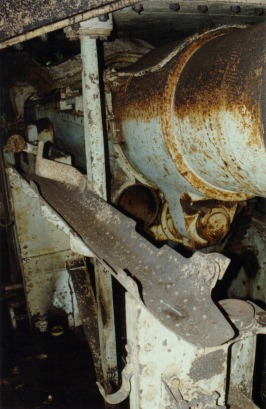
Figure 16. 8-inch gun at Sapuk (#2), Moen Is., Chuuk Atoll. Ammunition loading tray at the left of the gun barrel. Note the differential corrosion of the barrel (photo: D.H.R. Spennemann)
Gun laying
In the main, the gun was trained and pointed electrically, but could also be aimed manually. After each firing the bore of the gun was cleaned with an air blast from compressed air tanks.
Staff
Two guns, as well as the fire control and the ammunition train from the main storage to the gun emplacements were staffed by 63 men, according to captured Japanese documents relating to the two guns at Betio’s S.W. point. During combat an additional 12 labourers were seconded for ammunition handling (ISSMD/JICPOA 1943:11).